Showing posts with label "thrifty living". Show all posts

Sunday, January 15, 2012

Paper-Bag Cookery: Union Bag And Paper Company 1912: Antique Cooking Ideas

1912 Housewives Saved Time And Money Cooking In Union Paper Bags

I bought a box lot of vintage cook books and came across this booklet entitled "Paper-Bag Cookery: Complete Dir
ections and Recipes". This gem was prepared by the Union Bag and Paper Company in 1912.

Is Paper Bag Cookery A Thing Of The Past ?

I suppose cooking in paper bags was a great way to avoid cleaning pots and pans. I am all for that idea. You don't see much talk about cooking in paper bags anymore. Perhaps at Thanksgiving time, someone might cook a turkey in a roasting bag. But when was the last time you heard of friends cooking in paper bags?

The theory of cooking food in paper bags was that you could seal up food and preserve flavors, juices and reduce shrinkage.I suppose we could learn a lot from this 1912 cookbook that would help thrifty housewives today.

What Paper-Bag Cookery Promised:

1. Your butcher bill will be reduced at least ten per cent. Beca
use your three pound roast will come out of t
he oven weighing three pounds!

2. You can user cheaper meats and poultry because this cooking method does wonders when cooking meat.

3. Your fuel gas bill bill will be reduced by 20 per cent. Less heat is required. Yu use less burners and less heat.

4. No washing greasy pans and kettle. (THAT IS A WONDERFUL IDEA). The oven is not soiled by splattering from cooking food.

5. There is no danger from half washed pans and germs lurking in the corners.

6. No cooking odor in the house.

7. You don't have to watch your food cook.

8. Cook everything at once in the bag.

9. You can bake, roast, boil, stew in the bag.

10. A novice becomes an expert at once!


Warning in booklet: Do not use ordinary bags, they will make your food taste like paper.

Source: Paper Bag Cookery: The Union Bag and Paper Company, 1912

C. Dianne Zweig is the author of Hot Kitchen & Home Collectibles of the 30s, 40s, 50s and Hot Cottage Collectibles for Vintage Style Homes. She is also the Editor of I Antique Online an actively growing internet based resource community for people who buy, sell or collect antiques, collectibles and art. You can find Dianne’s fabulous retro and vintage kitchen, home and cottage collectibles at The Collinsville Antiques Company of New Hartford, CT, a 22,000 feet antique emporium with an in-house retro café.To read more articles by C. Dianne Zweig click on this link: C. Dianne Zweig’s Blog Kitsch ‘n Stuff Email me at dianne@cdiannezweig.comVisit my website, CDianneZweig.comDianne is a member of:The American Society of Journalists and AuthorsThe Society of Professional Journalists

Monday, May 16, 2011

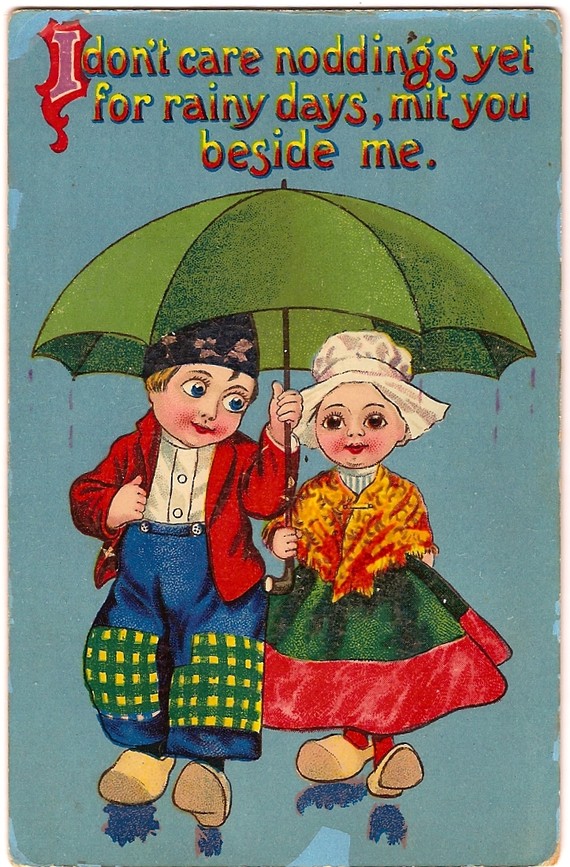
The Thrifty Kitschy Housewife Series: Caring For "Galoshes" And Other Bad Weather Apparel

Advice From A Collectible Homemaker's Handbook: "Keeping Your Galoshes, Rubber Boots And Raincoat in Tip Top Shape"

Yes indeed there are still folks who wear
galoshes and who worry about keeping their rubber boots, umbrellas and raincoats in tip top shape. I consulted a vintage booklet called "Worcester Telegram Homemaker's Handbook (1940s or 1950s?) to help my thrifty readers learn more about "Bad Weather Apparel".

Rubber Boots


To store rubber boots, pack the inside of each boot with tissue paper. Cover the outside with castor oil and store in a dry dark corner of a closet or cellar. Never store in the attic or near hot water or steam.
Mending Galoshes


Torn galoshes can be mended as follows: Use black or tan adhesive tape as a mending tissue. It is easy to apply and will hold securely if the work is carefully done.

Cleaning Rubber Raincoats

To clean a rummer raincoat, use lukewarm water and white soap. Wipe off with clear water and hang out to dry. Never use benzine or gasoline on rubber.

Rusted Umbrell
a

Clean the rust spots off with fine steel wool or a good cleaner. Then apply a little vaseline to the hinge to protect the framework from rust. When drying, so not open, but place handle side down in umbrella stand to dry. This prevents water from settling in the rib joints and causing rust.

Washing Galoshes

Just put them in the washing machine. Wash them thoroughly, rinse in warm water and dry in a warm place. They will come through unharmed and clean inside and out.

Children's image courtesy of http://www.etsy.com/shop/claudiasfinds?ref=seller_info

Photos of postcards courtesy of http://www.etsy.com/shop/Mioritza?ref=pr_shop_more

C. Dianne Zweig is the author of Hot Kitchen & Home Collectibles of the 30s, 40s, 50s and Hot Cottage Collectibles for Vintage Style Homes. She is also the Editor of I Antique Online an actively growing internet based resource community for people who buy, sell or collect antiques, collectibles and art. You can find Dianne’s fabulous retro and vintage kitchen, home and cottage collectibles at The Collinsville Antiques Company of New Hartford, CT, a 22,000 feet antique emporium with an in-house retro café.To read more articles by C. Dianne Zweig click on this link: C. Dianne Zweig’s Blog Kitsch ‘n Stuff Email me at dianne@cdiannezweig.comVisit my website, CDianneZweig.comDianne is a member of:The American Society of Journalists and AuthorsThe Society of Professional Journalists

Sunday, February 6, 2011

Vintage Ideas For House-Cleaning

Frugal Housekeeping Ideas
The Thrifty Kitschy Housewife

There really is no need to spend oodles of money on household products to keep your house in tip top shape or free of unwanted visitors. Just grab a cup of tea and read this post and you will be well on your way to becoming a nifty thrifty housewife.

To Kill Moths in Carpets:

On the floor, spread a cold, damp cloth on the carpet, iron it with a hot iron, and the steam thus caused will kill the moths.

To Clean Soiled Wallpaper:

Take half a loaf of bread and gently rub the soiled portions, working always in a downward direction. As soon as the bread is soiled cut off a thin slice.

To Drive Away Red Ants:

Keep a small bag of sulfur in the drawers or closets they frequent, and they will disappear.

Remember this advice comes from an early 1920s reference booklet. I am only sharing ideas from Lily Haxworth Wallace, the author.

From "Household Hand Book" by Edwardian expert
Lily Haxworth Wallace, early 1920s.

C. Dianne Zweig is the author of Hot Kitchen & Home Collectibles of the 30s, 40s, 50s and Hot Cottage Collectibles for Vintage Style Homes. She is also the Editor of I Antique Online an actively growing internet based resource community for people who buy, sell or collect antiques, collectibles and art. You can find Dianne’s fabulous retro and vintage kitchen, home and cottage collectibles at The Collinsville Antiques Company of New Hartford, CT, a 22,000 feet antique emporium with an in-house retro café.To read more articles by C. Dianne Zweig click on this link: C. Dianne Zweig’s Blog Kitsch ‘n Stuff Email me at dianne@cdiannezweig.comVisit my website, CDianneZweig.comDianne is a member of:The American Society of Journalists and AuthorsThe Society of Professional Journalists

Saturday, February 5, 2011

How To Remove Stains From Clothing: Thrifty Retro Housewife Ideas

Stain Remover Tips:
The Thrifty Kitschy Housewife Series

This post should help all of you Retro gals finally figure out how to get stubborn stains out of your laundry. Back in the day... laundry work was a real pain. so housewives had to perfect the art of washing and caring for clothes with home remedies, using such things as tomato juice, salt, lemon etc. All the zillion products that we find in the stores today to help us cope with nasty stains just didn't exist in early homes.

So, I have searched this topic and now share with you the wisdom of Lily Haxworth Wallace, an expert on Home Management back in the early 1920s. (Tomato jar photo is from a wonderful blog called Oodle a Kadoodle Primitives


Laundry Work: Remo
ving Stains From Clothing

To Remove Tea And Coffee Stains:
Stretch the stained place over a bowl and pour boiling water through the strain.

To Remove Ink Stains:

While fresh soak in milk, sing fresh milk as it becomes discolored. If the stain has been allowed to dry use salts of lemon, first wetting the spot, then rubbing the salts on and rinsing well with cold water. It may sometimes be necessary to repeat the process.

To Remove Wine or Fruit Stains:

Put a layer of salt on the stain as soon as made and treat with boiling water the same as for tea stains.

Delicate Woolens:

Soft sweaters and babies garments which will not perfectly survive the most careful washing can be cleansed by a dry washing in wheat flour. Rub and squeeze in the flour just as you would in water, but work gently. Shake out the soiled four and if needful go over the garment again with fresh flour. By this method the garments do not lose their shape and are ready for use as the cleansing process is completed.

Automobile or Carriage Grease:

Grease can be removed from silks and fabrics which will not stand washing, by covering them with magnesia (powdered) rubbing it well into the fabric and letting it remain for two or three days. Brush out and remove any clinging powder with a soft cloth.

Grass Stains:


Wash the stained part in alcohol and rinse in clear water, while the stain is fresh, if possible.

Perspiration Stains:

Should be removed by rubbing with soap and laying the garment in the hot sun.

Machine Oil Stains:

Should be rubbed with soap and cold water. Hot water may make these stains permanent.

To Remove Mildew
:

Rub over the marks with juice of a raw tomato, sprinkle with salt and lay in the sun. repeat the process if necessary two to three times.

Remember: These hints are from the early 1920s.....I am only the messenger not the laundry maven who came up with these tips. By gosh, I barley know how to turn on my washer and dryer!

Please let us know if you try any of these gems.

Photos shown are from these great blogs:

http://oodlekadoodleprimitives.blogspot.com/2010/08/canning-week-tomato-soup-recipes.html
http://www.etsy.com/shop/kelleystreetvintage
http://mycountryhomedecor.com/pro1054207.html
http://www.sportingcollectibles.com/kitchenalia.html

C. Dianne Zweig
is the author of Hot Kitchen & Home Collectibles of the 30s, 40s, 50s and Hot Cottage Collectibles for Vintage Style Homes. She is also the Editor of I Antique Online an actively growing internet based resource community for people who buy, sell or collect antiques, collectibles and art. You can find Dianne’s fabulous retro and vintage kitchen, home and cottage collectibles at The Collinsville Antiques Company of New Hartford, CT, a 22,000 feet antique emporium with an in-house retro café.To read more articles by C. Dianne Zweig click on this link: C. Dianne Zweig’s Blog Kitsch ‘n Stuff Email me at dianne@cdiannezweig.comVisit my website, CDianneZweig.comDianne is a member of:The American Society of Journalists and AuthorsThe Society of Professional Journalists

Monday, January 11, 2010

Don't Throw It Out: Advice From Frugal Forties Housewives

A Vintage Guide To Thrifty Living
This is another installment of sage advice from the 1940's housewife on how to run a thrifty household.

DON'T THROW IT OUT

1. Old Flannel Pajamas: when they are ready to toss....cut them up into squares, bind several squares together and use as potholders.

2. Odds and ends from old dresses while really old , look new when made into hats, purses, scarves, etc.

3. Old plastic shower curtains can be converted to aprons. Or use them to cover porch pillows.

4. Old cotton stockings can be ripped down the seem and used as dust cloths.

5. Worn out blankets...try taking two or three worn out blankets and stitch them together covered with a cotton print. Now you have a warm comforter.

6.Old linoleum can be cut into small pieces and made into placemats.

7. A Retired curtain rod makes a handy shoe rack. Just tack it on the closet door, and hang the shoes by their heels on it.

8. Old but laundered socks, pulled over shoes not in use, or when they are packed for travel will keep them like new and separated from other packed items.

9. Old paint brushes become pliable when soaked in hot vinegar.

10. Leaky vases can be stopped by melting paraffin over the leaky spot and let it harden.

Source "1003 Household Hints", 1947 Edited by Michael Gore

C. Dianne Zweig is the author of Hot Kitchen & Home Collectibles of the 30s, 40s, 50s and Hot Cottage Collectibles for Vintage Style Homes. She is also the Editor of Iantiqueonline.com an actively growing internet based resource community for people who buy, sell or collect antiques, collectibles and art. You can find Dianne’s fabulous retro and vintage kitchen, home and cottage collectibles at The Collinsville Antiques Company of New Hartford, CT, a 22,000 feet antique emporium with an in-house retro café.

To read more articles by C. Dianne Zweig click on this link:
C. Dianne Zweig’s Blog Kitsch ‘n Stuff

Email me at dianne@cdiannezweig.com

Visit my website, CDianneZweig.com

Dianne is a member of:
The American Society of Journalists and Authors
The Authors Guild, Inc.

ShareThis